
Whale tales | Case studies and client projects
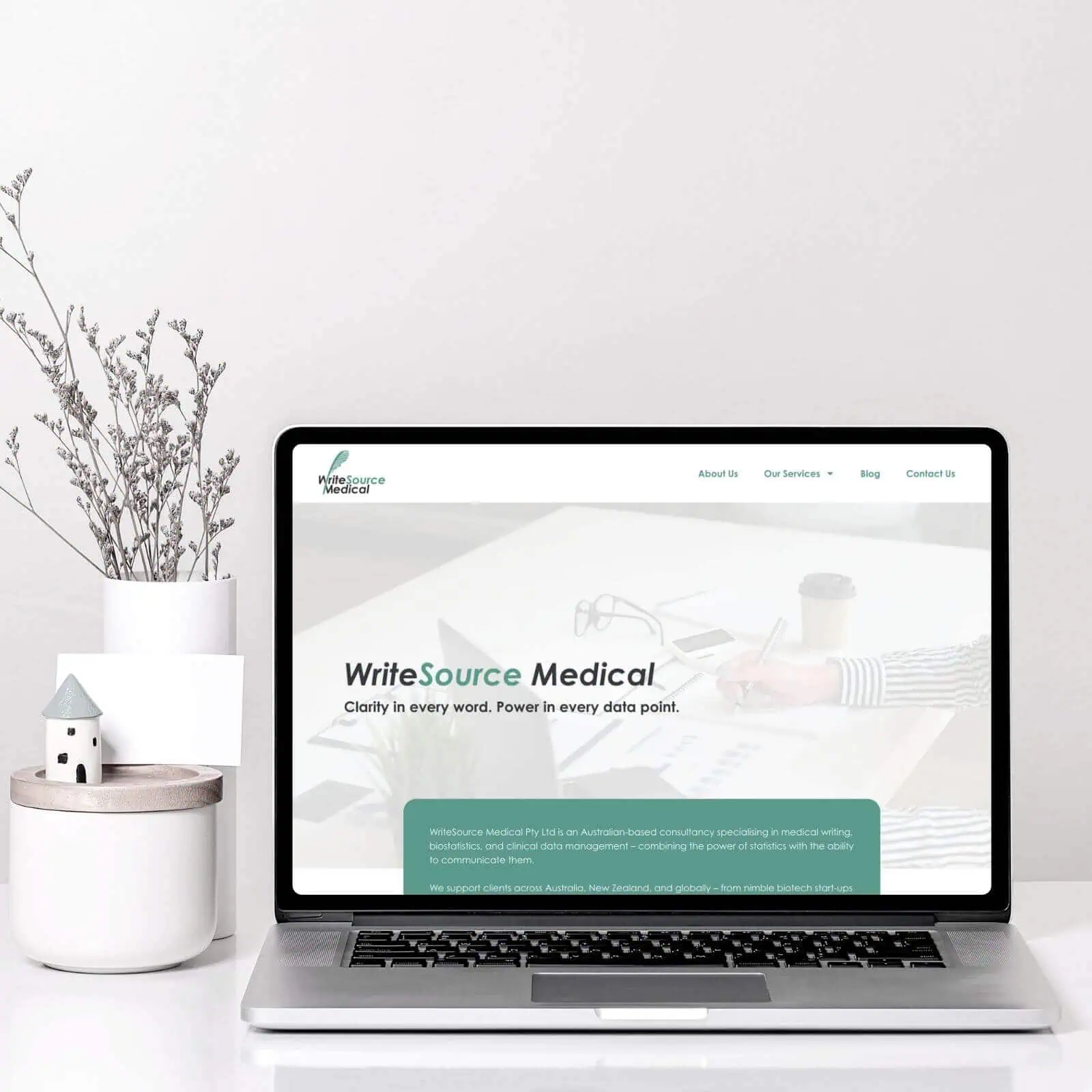
Custom sustainable website design for a global healthcare consultancy

- Carbon footprint: D grade → A grade
- 83% reduction in average CO₂ emissions
- Estimated 6 kg CO₂ saved per year
Project snapshot
Client
Industry / sector
Service delivered
Location
The Brief
What WriteSource Medical needed from their website redesign
WriteSource Medical is a boutique Australian consultancy specialising in medical writing, biostatistics, and data management. Their work is high-calibre, highly technical, and deeply human-first. They needed a website that reflected all of that.
Before a single design decision was made, we worked through the Deep Dive process – a detailed strategy questionnaire covering everything from brand values and target audience through to technical requirements, content priorities, and sustainability goals. That was followed by a strategy session to consolidate the findings and map out the project from start to finish. It’s that depth of understanding upfront that made the rest of the build process smooth and the outcome so closely aligned with what WriteSource needed.
When they came to me, the existing site was showing its age. The design didn’t communicate the quality of their work, navigation was clunkier than it needed to be, and the overall experience made it harder than it should’ve been for potential clients to understand who they are and what they offer. On top of that, with a growing global client base spanning Australia, New Zealand, and beyond, they needed a site that could reach international audiences with authority.
Their goals were clear: a refreshed web presence that was easy to navigate, easy for the team to update, and that reflected their values – sustainability included. And one that communicated their services simply and clearly to a wider world.
What I did
Building a custom, low-carbon WordPress website for healthcare
This was a full-scope Breach project, starting from strategy and going all the way through to a live, polished site.
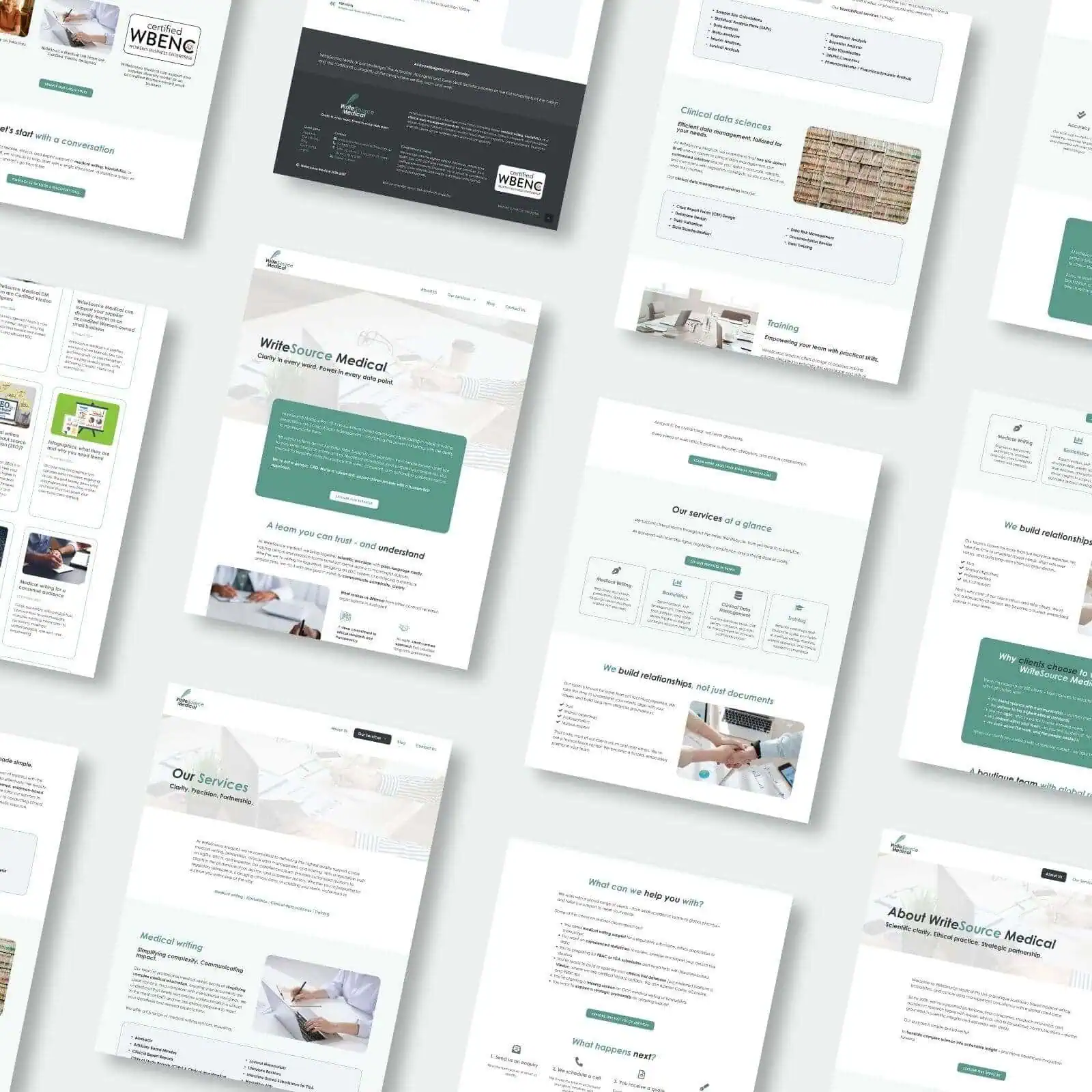
We started with brand strategy and full website copywriting, so that by the time we moved into the design phase, every word had a job to do. From there, I designed and built a fully custom WordPress site in Elementor, with clear attention to user experience, clean structure, and carbon-conscious development included from day one.
Every decision was made with two things in mind: the human experience of visiting the site, and the environmental footprint of running it. Clean code, optimised images, smart caching, and lean page architecture aren’t just performance wins – they’re sustainability wins too.
This project included:
- Brand strategy
- Website copywriting
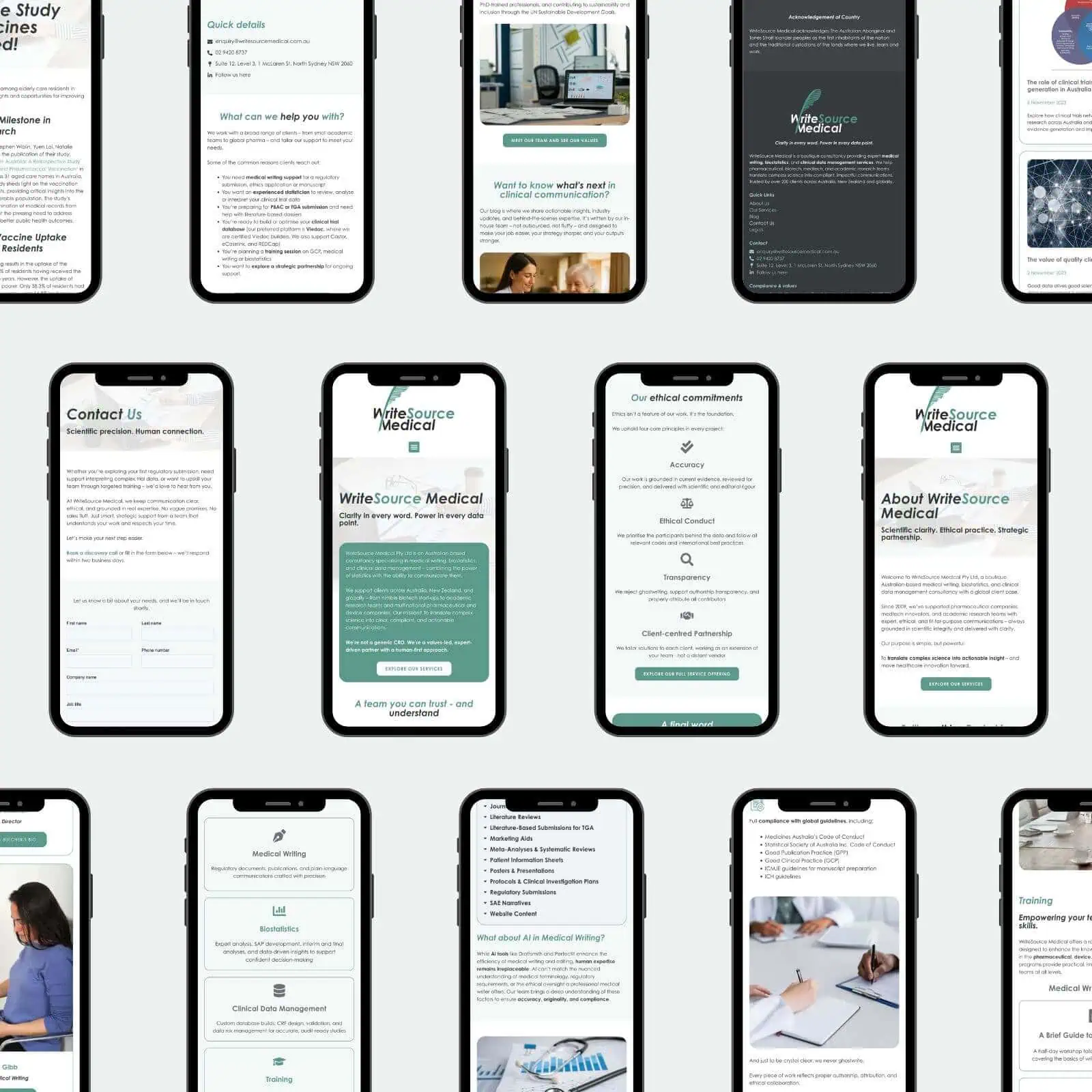
- Custom WordPress design and build (Elementor)
- UX and site structure planning
- Advanced image optimisation
- Carbon-conscious development
- Before and after carbon footprint measurement
The Fluke Code in Action
How I Built a Sustainable, Accessible Healthcare Website from the Ground Up
Every Whale Tail Digital project follows the Fluke Code – five pillars that make sure sustainability, accessibility, and performance are built in from the start, not bolted on at the end. Here’s how it showed up for WriteSource Medical.
Lightweight design
Brand strategy and copywriting came first, so every page launched with intentional, purposeful content from day one. No filler, no bloat – just lean pages that do the work they need to do.
Efficient build
A clean Elementor build with minimal plugins, no unnecessary code, and a tidy technical foundation that keeps the site running fast and smoothly.
Responsible infrastructure
Smart caching and image optimisation ensure WriteSource Medical’s global audience gets a fast, low-energy experience wherever they’re connecting from.
Inclusive access
Accessibility built in from the start: colour contrast, semantic heading structure, descriptive alt text, and keyboard-navigable layouts across the whole site.
Measurable impact
Carbon footprint benchmarked before and after using three independent tools. Result: D grade → A grade, 83% reduction in average emissions.
The Results
Before and After: Website Carbon Footprint and Performance
Metric | Before | After |
|---|---|---|
Carbon grade | D | A |
Average CO₂ per page visit | 0.656g | 0.115g |
Page weight | 2.055 MB | 393.58 KB |
Mobile Speed Index | 5.0 secs | 2.7 secs |
The key wins
- Carbon footprint improved from D grade to A grade
- 83% reduction in average CO₂ emissions
- Page size reduced by more than 80%
- Estimated 6 kg CO₂ no longer released into the atmosphere each year
- A clean, modern, user-friendly site that actually reflects the quality of their work
- Easy for the WriteSource team to manage and update independently



The Sustainability Impact
The environmental impact of a healthcare website redesign
Moving from a D grade to an A grade isn’t a small step. It’s a significant shift in the environmental footprint of every single page visit, every single day.
The 83% reduction in average CO₂ emissions means WriteSource Medical’s website has gone from 0.656g per page visit to just 0.115g – and with a global client base generating page visits from across the world, that compounds quickly.
Estimated savings: 6 kg of CO₂ per year that’s no longer entering the atmosphere. That’s roughly the equivalent of 24 km of driving not taken, and it’s happening automatically, on every visit, every day.
Sustainability was part of the brief from the start. That’s exactly how it should be.
What they said
Kind words from clients
Sarah has been an absolute pleasure to work with. She took the time to carefully understand our business, and then built our website with our ‘voice’. Highly recommend!